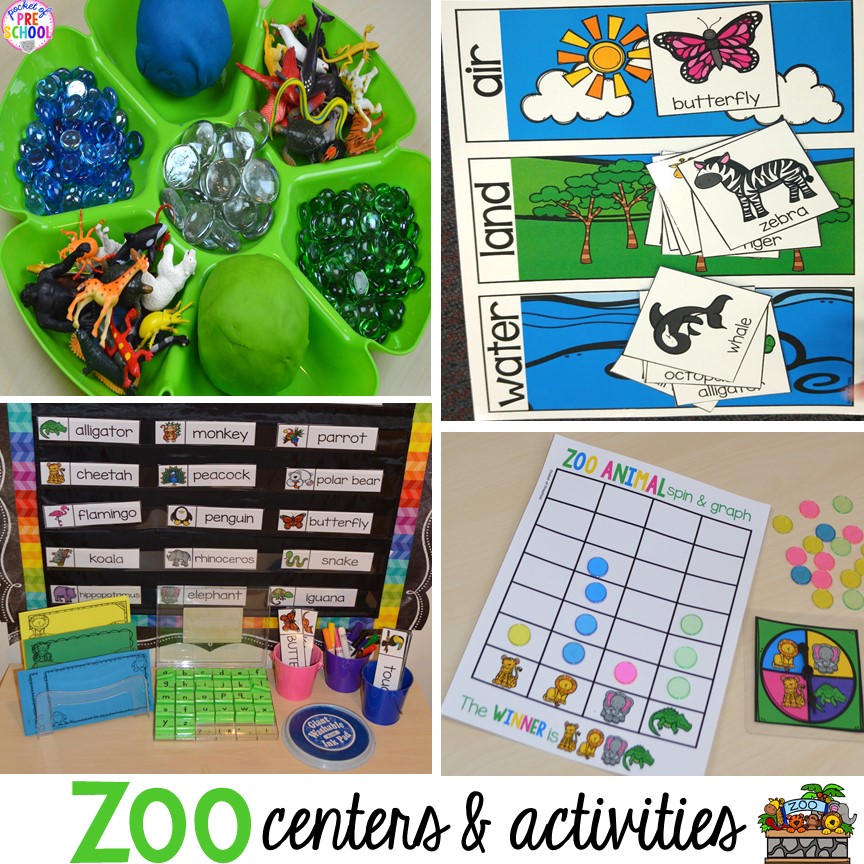
Zoo is one of my students’ favorite themes of the year. It’s a fun and engaging theme for students and teachers alike. Animals fascinate children, and this theme builds upon the interest that already exists. Be sure to grab the Desert Art Freebie and Zoo Pattern Blocks Freebie later in the post too! It makes the cutest bulletin board, and it’s a great scissor skills activity too!
Grab the FREEBIE by entering your email in the box at the bottom of this post. This post contains affiliate links which means I earn a tiny commission when you use my links at no cost to you.
The zoo theme usually lasts about four weeks in my classroom. Each week we focus on a different habitat: week one is the rainforest, week two is the savannah, week three is the desert, and week four is the arctic. Sometimes we do a fifth week all about the ocean if students are interested in it.
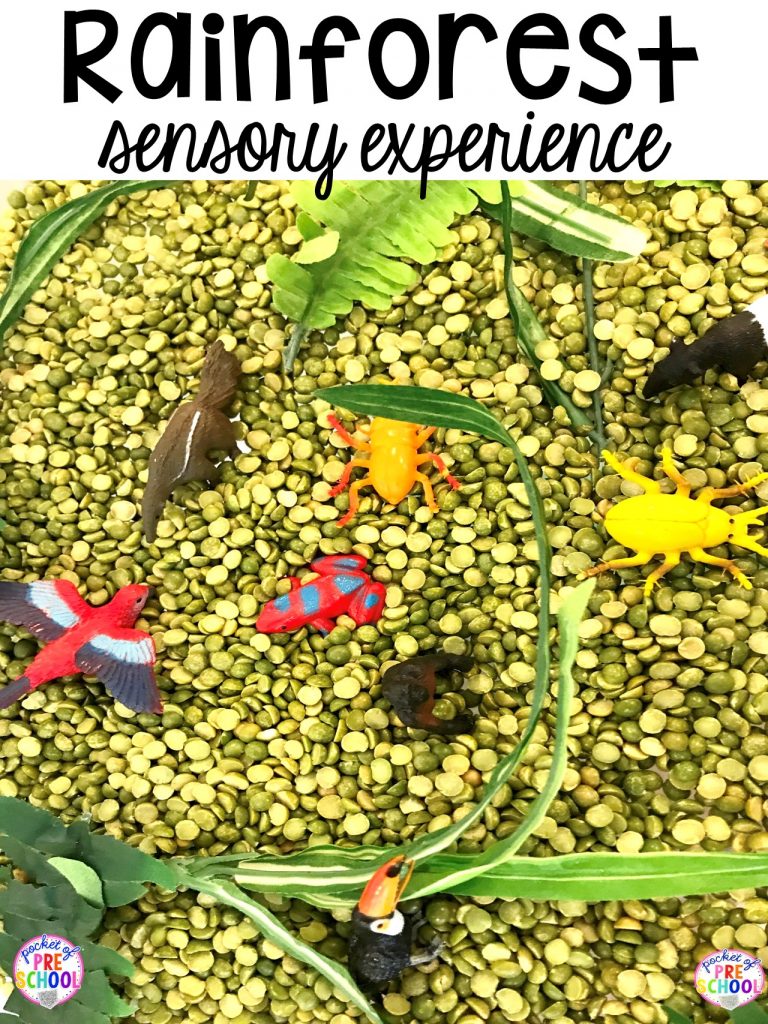
Rainforest Sensory Table: Each week, I change the sensory table to a different small-world habitat. Creating the rainforest sensory table was easy. I used dry peas, fake plant pieces, and rainforest animals. Not pictured are trees students made using craft sticks and green construction paper and a river made with blue crepe paper.
At the sensory table, students are using theme-related vocabulary, practicing self-regulation as they play with others (sharing, controlling their body, inside voice), using their imagination as they play with the animals, and developing language as they engage in conversations with their peers. Play is learning!
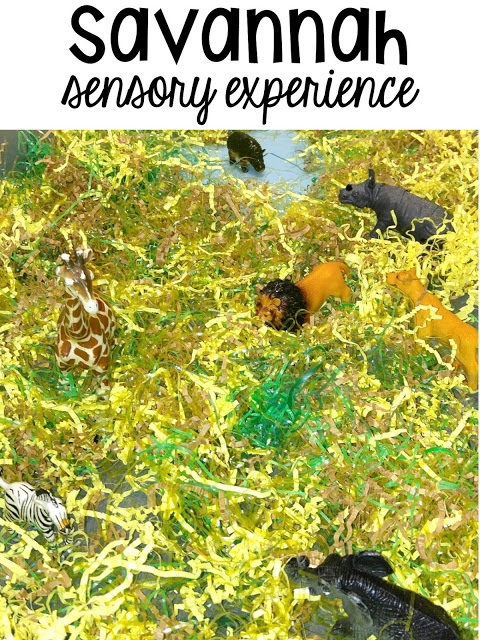
Savannah Sensory Table: The savannah habitat is yellow shredded paper, brown shredded paper, green Easter grass, and savannah animals. I made a small watering hole using a blue foam board. You can buy the shredded paper in the party section at the Dollar Tree.
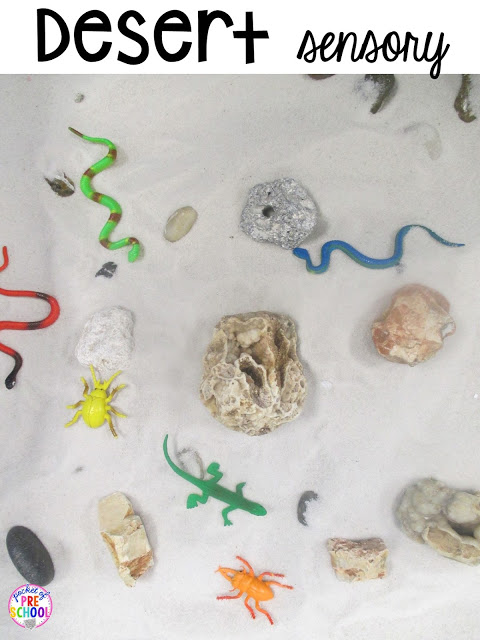
Desert Sensory Table: The desert is sand, rocks, desert animals, and insects.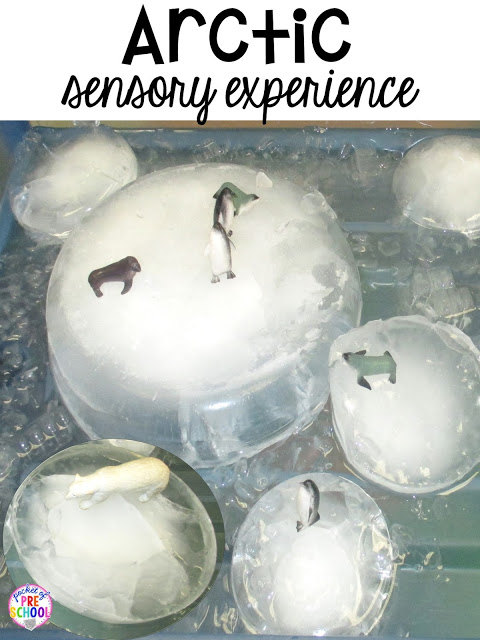
Arctic Sensory Table: The arctic is water, ice, and arctic animals. I froze big bowls of water to make the icebergs!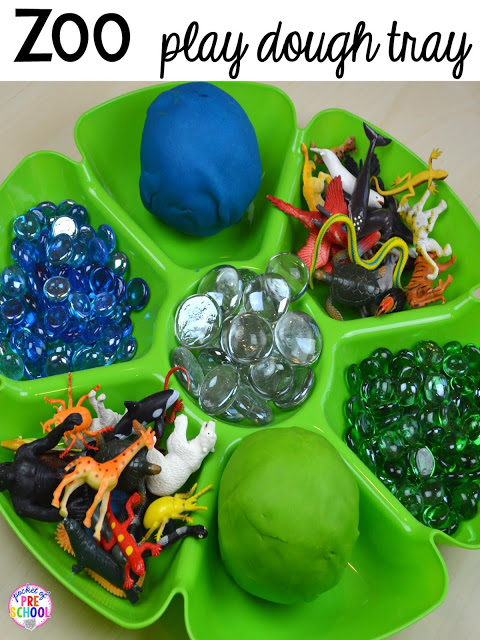
Zoo Playdough Tray: A zoo play dough tray is great for strengthening their fine motor muscles. Students can be creative and sculpt habitats and homes for the animals. Students are also classifying and sorting the animals by their habitat. The blue play dough represents water, and the green play dough represents grass or a forest. The glass gems are fun too! They loved making icebergs for the arctic animals using the white gems.
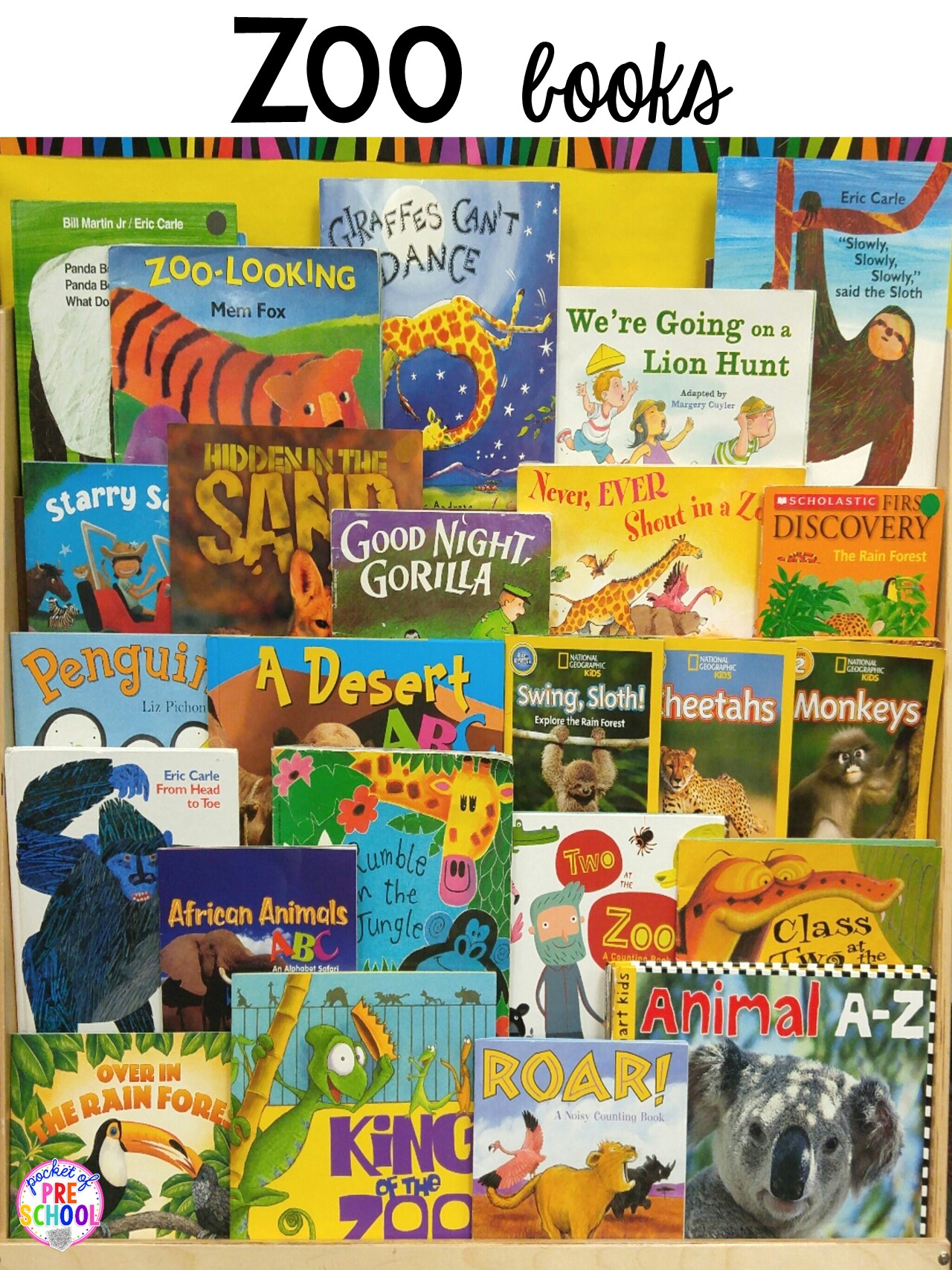
Zoo Bookshelf: There are so many amazing zoo picture books! I had the hardest time deciding which books to read during circle time. I think From Head to Toe by Eric Carle is my favorite! You can check out all my favorite zoo books in this Zoo Book List!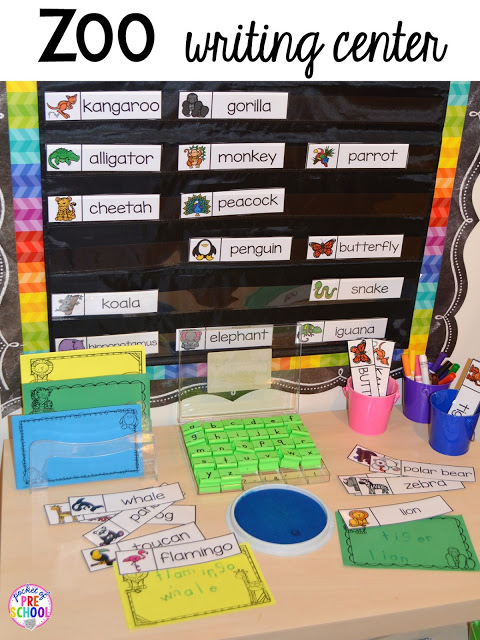
Zoo Themed Writing Center: At the writing desk, I added stamps! Students could stamp the zoo vocabulary words on zoo paper! Keep the writing desk inviting by adding new writing tools like lowercase letter stamps, uppercase letter stamps, or letter stickers.
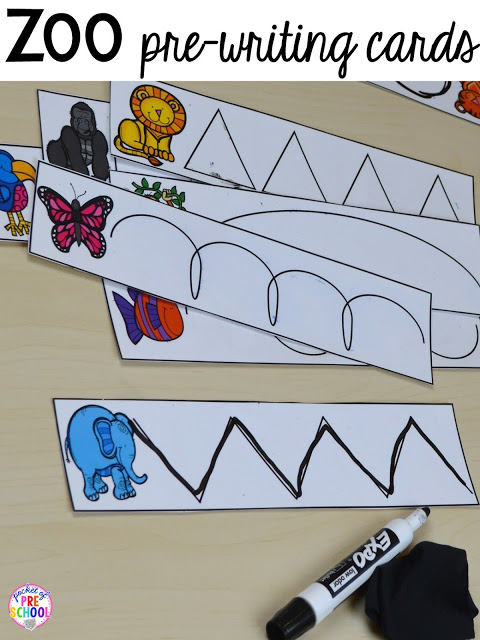
Zoo Pre-Writing Cards give students the opportunity to trace different types of lines and shapes. Writing is HARD! Tracing lines using dry-erase markers make tracing fun even if it’s hard work!
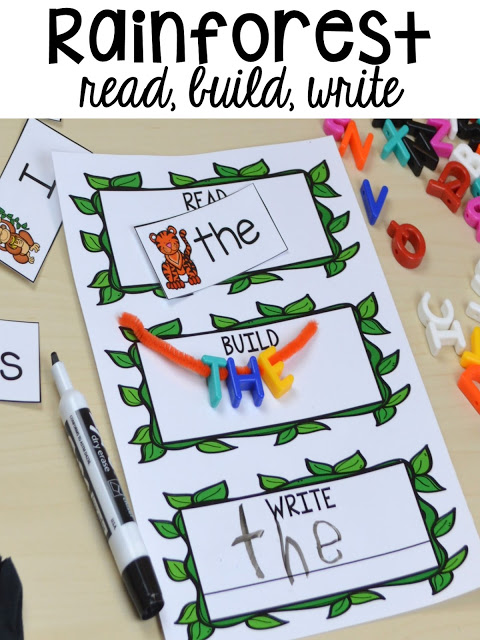
Rainforest Read, Build, Write makes writing sight words FUN. To add more fine motor, students would build the word by stringing letter beads on a pipe cleaner! My three-year-olds did the same activity using their friends’ names instead of sight words!
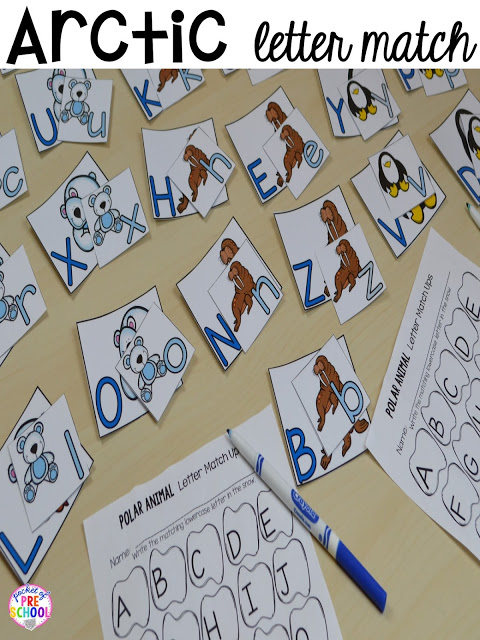
Arctic Letter Match had students match the “baby letters” (aka lowercase letters) with the “mommy letters” (aka uppercase letters).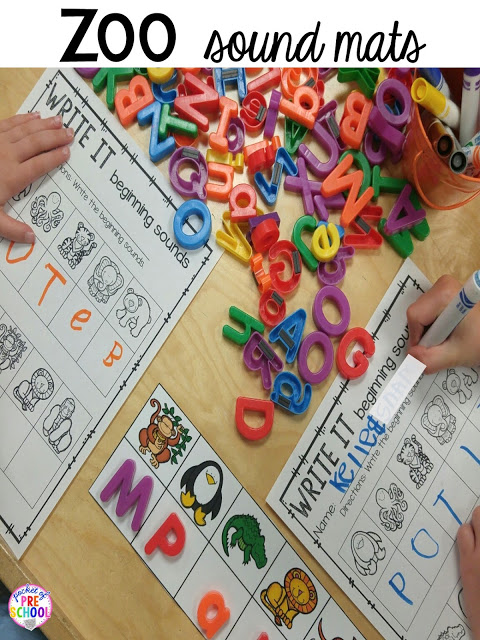 Zoo Beginning Sound Mats and magnet letters are perfect for learning and practicing beginning sounds. Play at a table or on a magnet board.
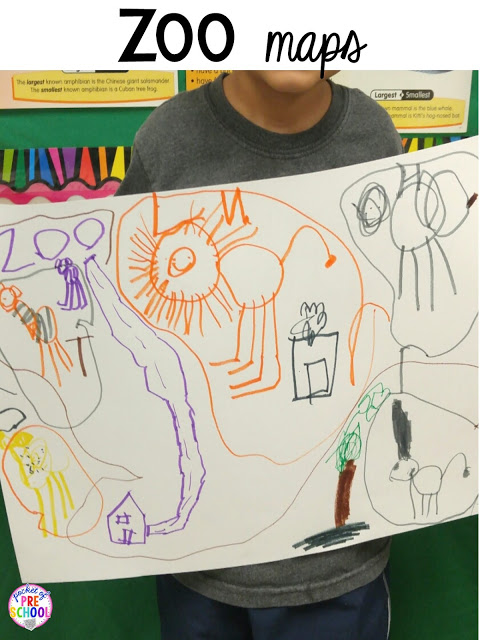 Zoo Maps: Zoo is the perfect theme to learn about maps. There are maps all over the zoo! Look at real zoo maps (online or bring some into the classroom). Notice all the different parts of a map, the labels, the symbols, and the paths. Students made their own maps of a zoo! That lion on this student’s map just makes me smile.
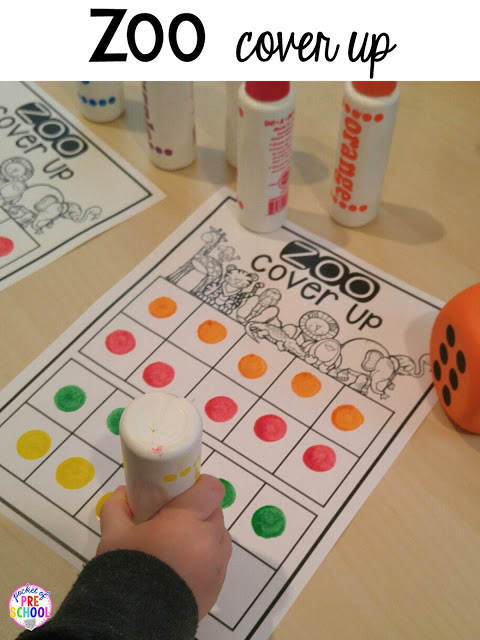
Zoo Cover Up helps students build one-to-one correspondence. Too easy? No worries! Just use the double ten-frame board and two dice. Students roll the dice and add and dot the total.
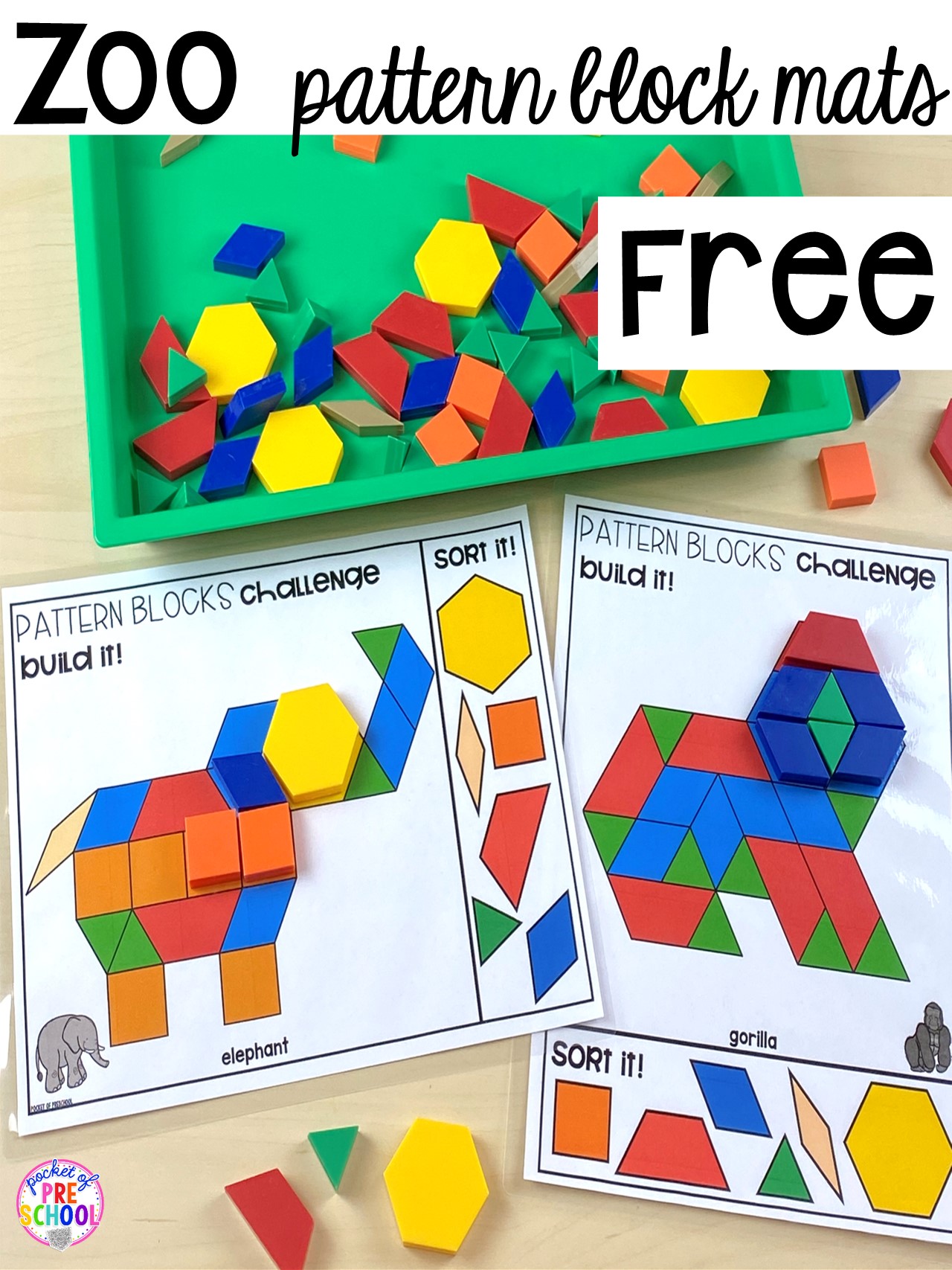
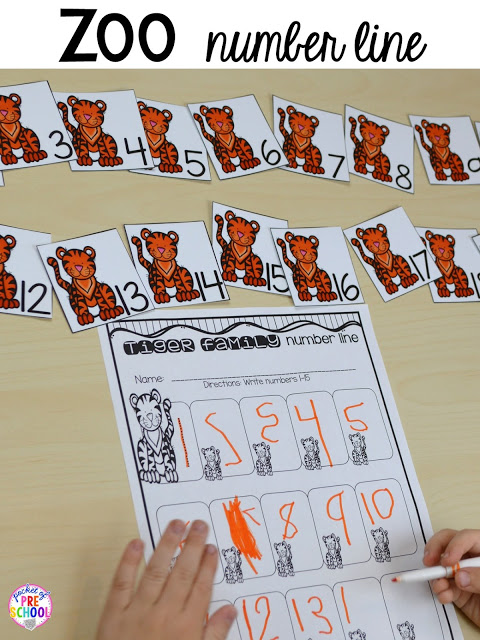
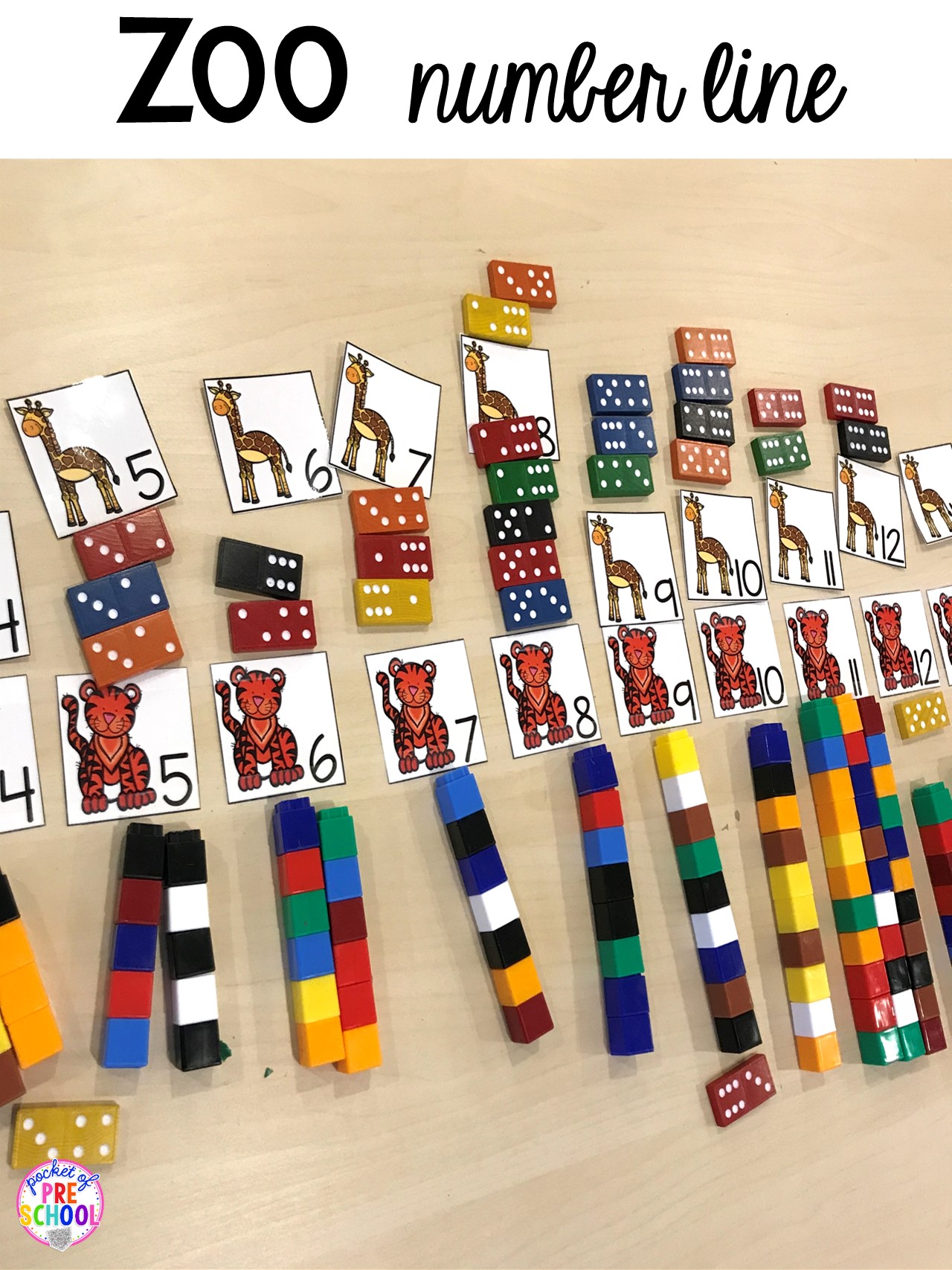
Zoo Family Number Line! This game was a hit with the boys! They would make the number line over and over and over. So the next day, we did it again but with a twist. Students made a number line and then matched more animal number cards and math manipulatives (dominoes and cubes).
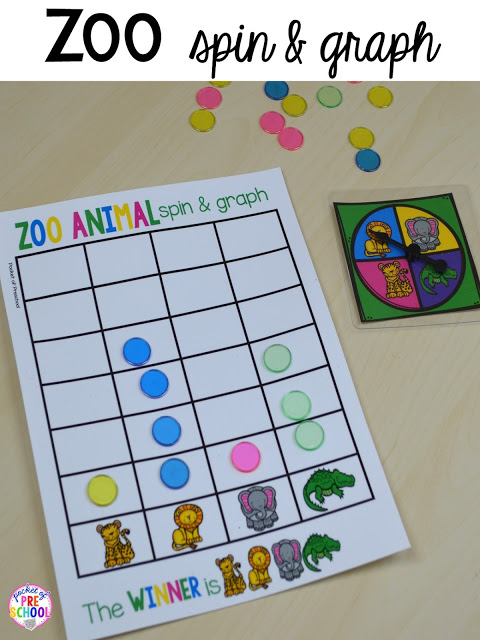
Zoo Sorting has so many possibilities! There are endless ways you can sort zoo animals. You can sort by color, size, pattern, habitat, water/land/air, number of legs, and by things that don’t belong (ex: wings, no wings). Try sorting animal figures by size.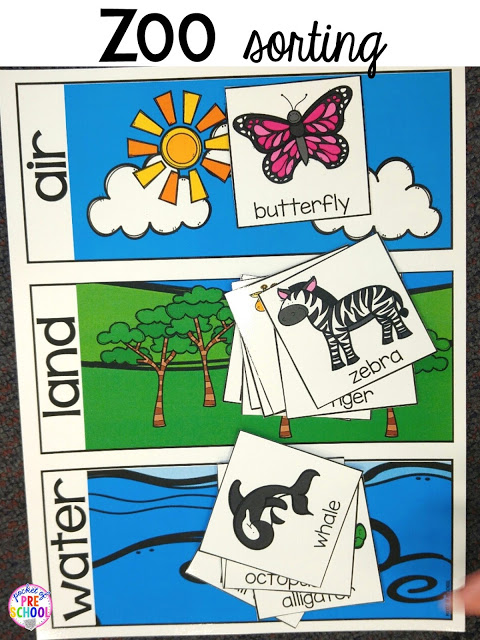 Zoo Spin and Graph gives students a chance to make their own graphs! It has a spinner too, which students LOVE! This is just a clear spinner with the mat taped to it. Students are using magnetic bingo chips for their graph because at the end, they clear the graph with a magnetic wand!
 Zoo Cutting Collage: Have you tried magazine cutting collages? If not, you should! Grab some zoo magazines or any magazines with animals and let students cut out the pictures. And, yes, the little threes will cut right through the animal. Just be happy they are having fun cutting and strengthening those little muscles. Tape is their friend. If you don’t have any magazines, ask parents to donate them, or you can buy old ones at the library super cheap.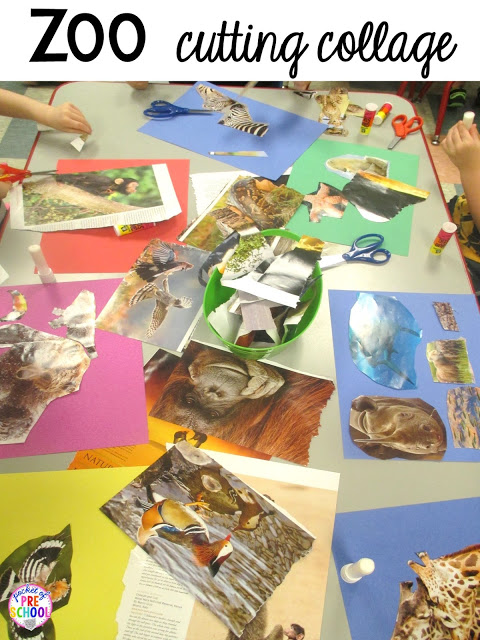
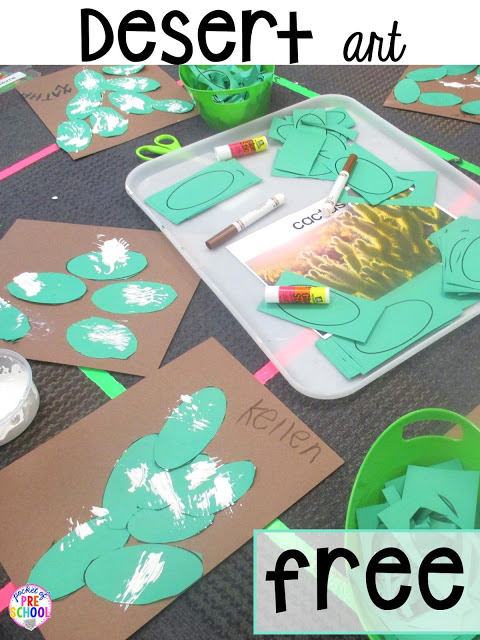
Desert ART FREEBIE! Go grab it BELOW. Some of my students have never seen a desert or a cactus before. I printed out a few photos of cactus plants to help them visualize what they were creating. Students cut out the green ovals and glued them to the brown paper to create their cactus plant. Then using a fork, students scraped on “spines” with white paint. It is the perfect activity for students who need to practice cutting curves.
>>Grab the FREEBIE by entering your email in the box at the bottom of this blog post!<<
Rainforest Art! We also created Rainforest Art! Students drew the branches of the trees using a brown marker. Then they added leaves with green puffy paint. Puffy paint is super easy to make. Just mix glue, shaving cream, and food coloring together.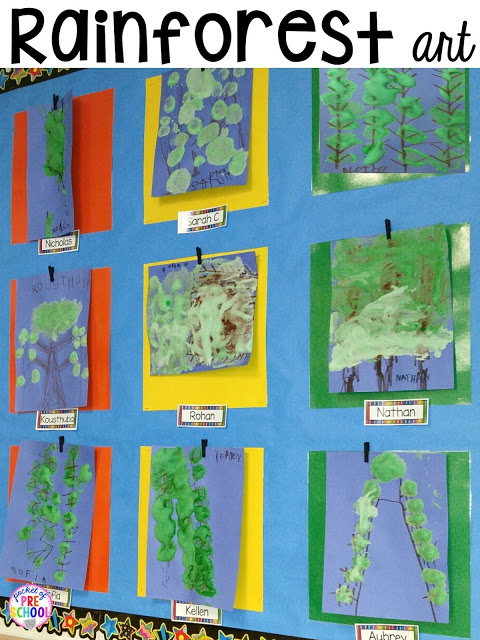 Zoo Animal Painting! Writing and drawing on vertical surfaces is SO important for little learners! To support my little artists, I put photos of zoo animals in the art tray. Students would use them as they painted. They could look at the photo and decide what colors or parts of the animal to paint.
Did they have to use the photos? Absolutely not. If someone wanted to paint a purple giraffe with ten legs, they absolutely could.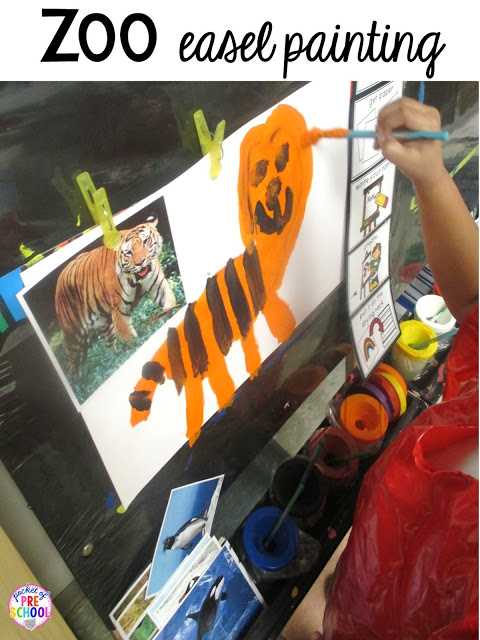
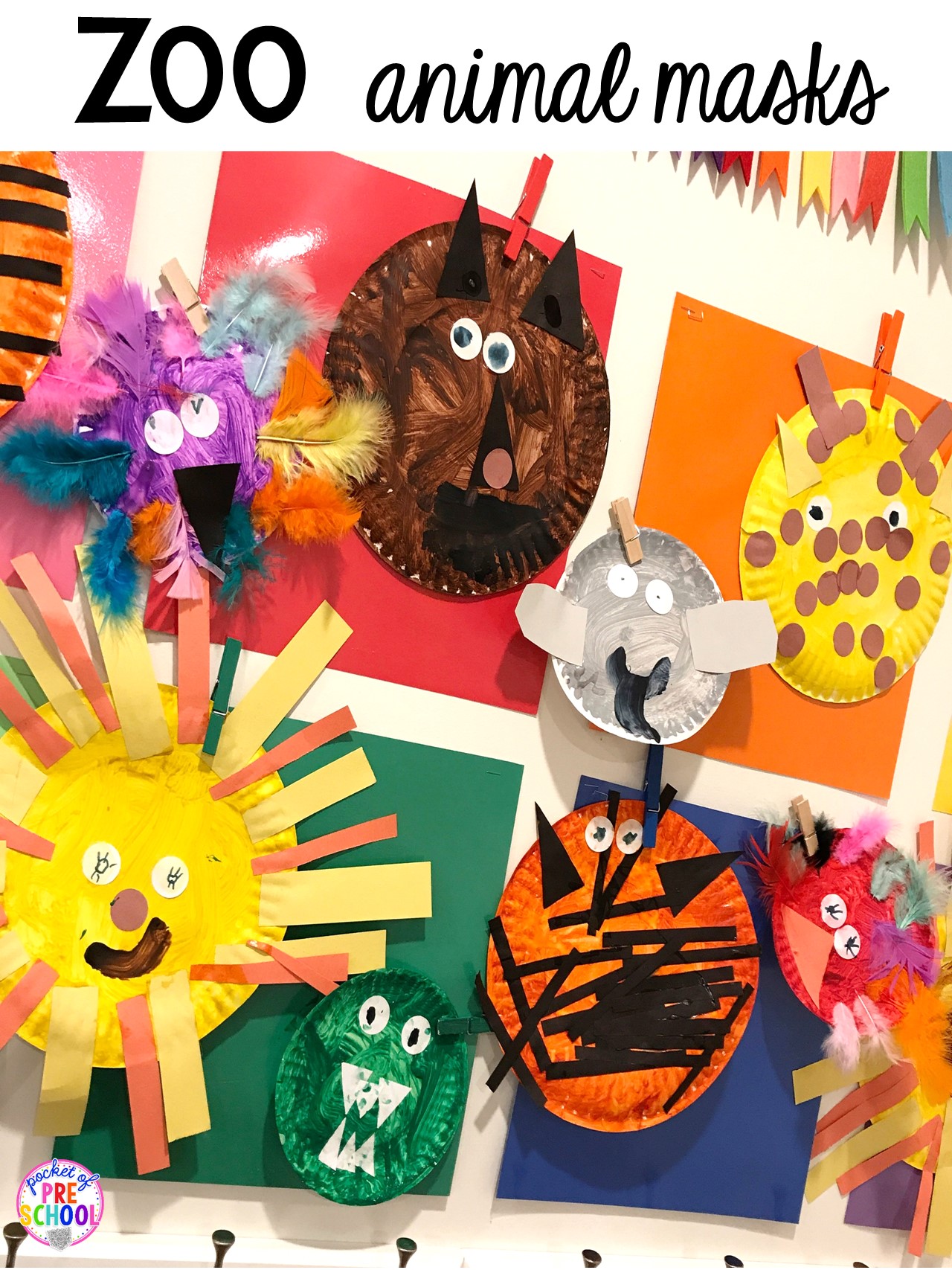
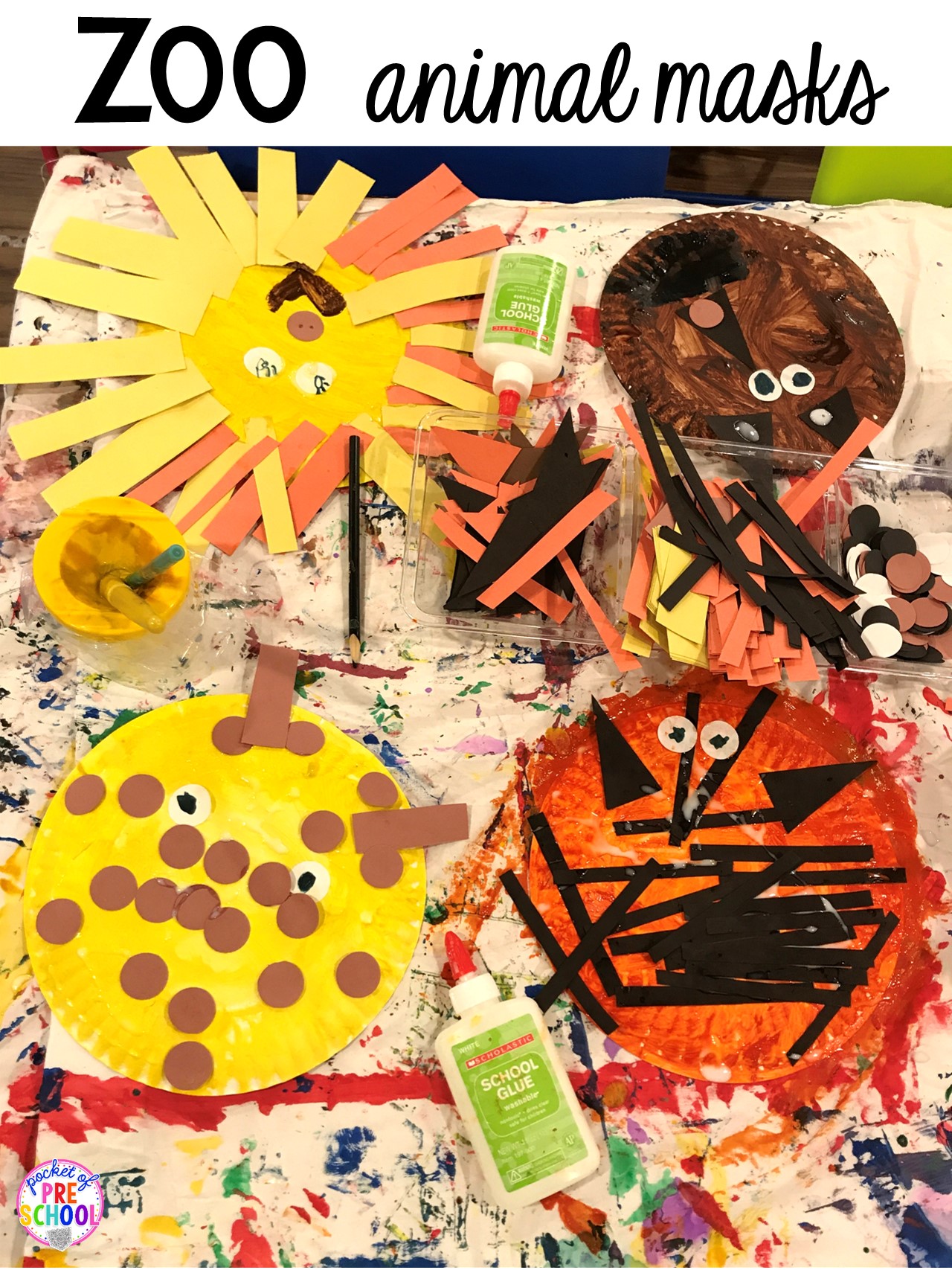
Zoo Animal Masks I put out a sorting tray with brown/black circles, feathers, brown/yellow/orange/black stripes, and orange triangles. Students could create any zoo animal mask they wanted, and look how they turned out! Now the lions may look more like suns, but don’t you just love how they are all unique! Some students wanted to make other animals like alligators and elephants. They even told me what supplies they needed to create them!
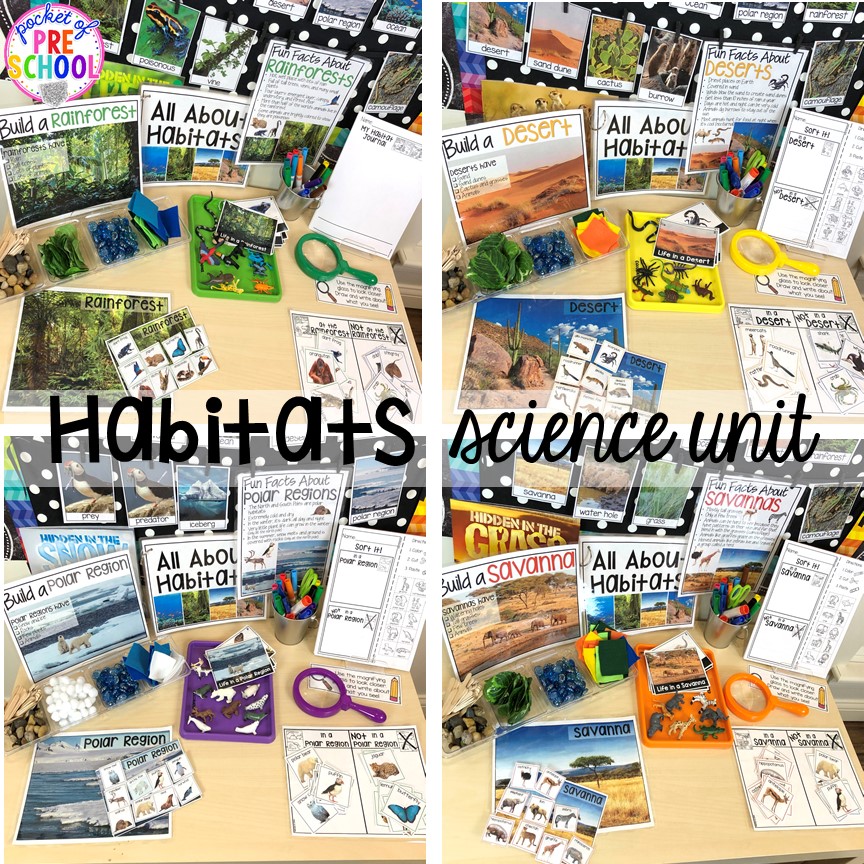
Zoo Blocks Center: In blocks, as we learned about each habitat, I asked students what materials they needed to create the habitat. They decided what we needed and helped me make the labels! I also added STEM I Can Build Landforms and Habitat posters and non-fiction books for visual support too. The “sand dunes” are just yellow card stock cut up into odd shapes. The icebergs are triangle blocks covered in foil.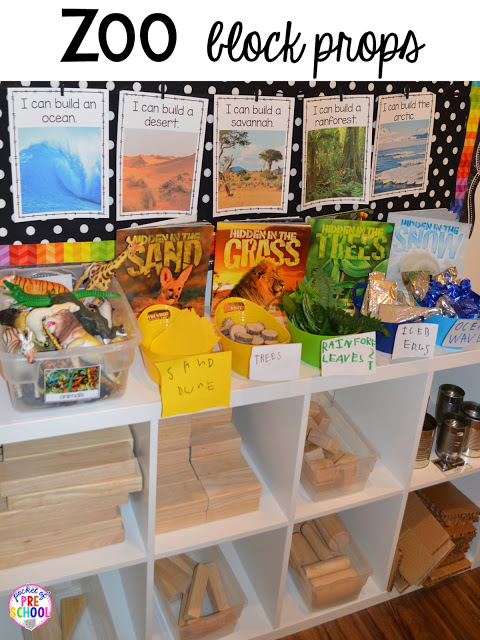 Zoo Science: Explore habitats at the science table during a zoo theme. If you focus on one habitat a week, then make the science table about the habitat you are exploring each week to match. You can also pick a favorite, like a rainforest, and just explore one. It’s up to you. Pack the science table with real photos, vocabulary cards, plastic animals, magnifying glasses, and items for students to build tiny animal habitats at the table. You can grab all of these zoo printables in my All About Habitats Science Unit.
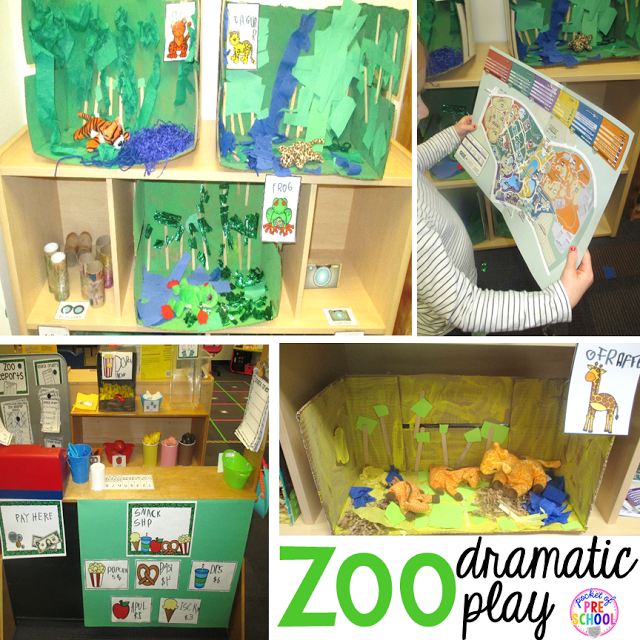
I hope that you are inspired and filled your lesson plan book with tons of fun and engaging zoo activities for your little learners.
Want all my ZOO center printables you see in this post plus a ton more?
Go grab Zoo Math and Literacy Centers HERE. Just print, prep, and teach!
Grab my Habitats and Landforms STEM I Can Build HERE (posters I used in the blocks center).
 Grab my All About Habitats Science Unit (includes Ocean, Savanna, Rainforest, Desert, and Polar Regions) for the science center.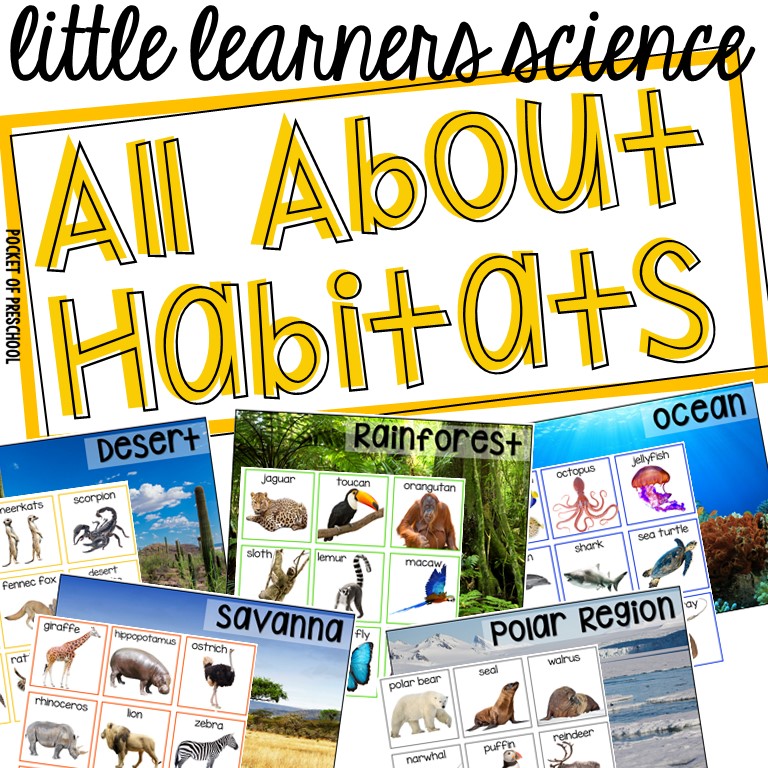
Love it? Pin it!
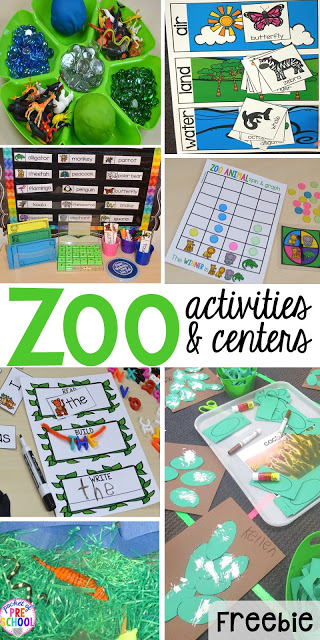
Need more zoo inspiration? Follow my ZOO Pinterest board.